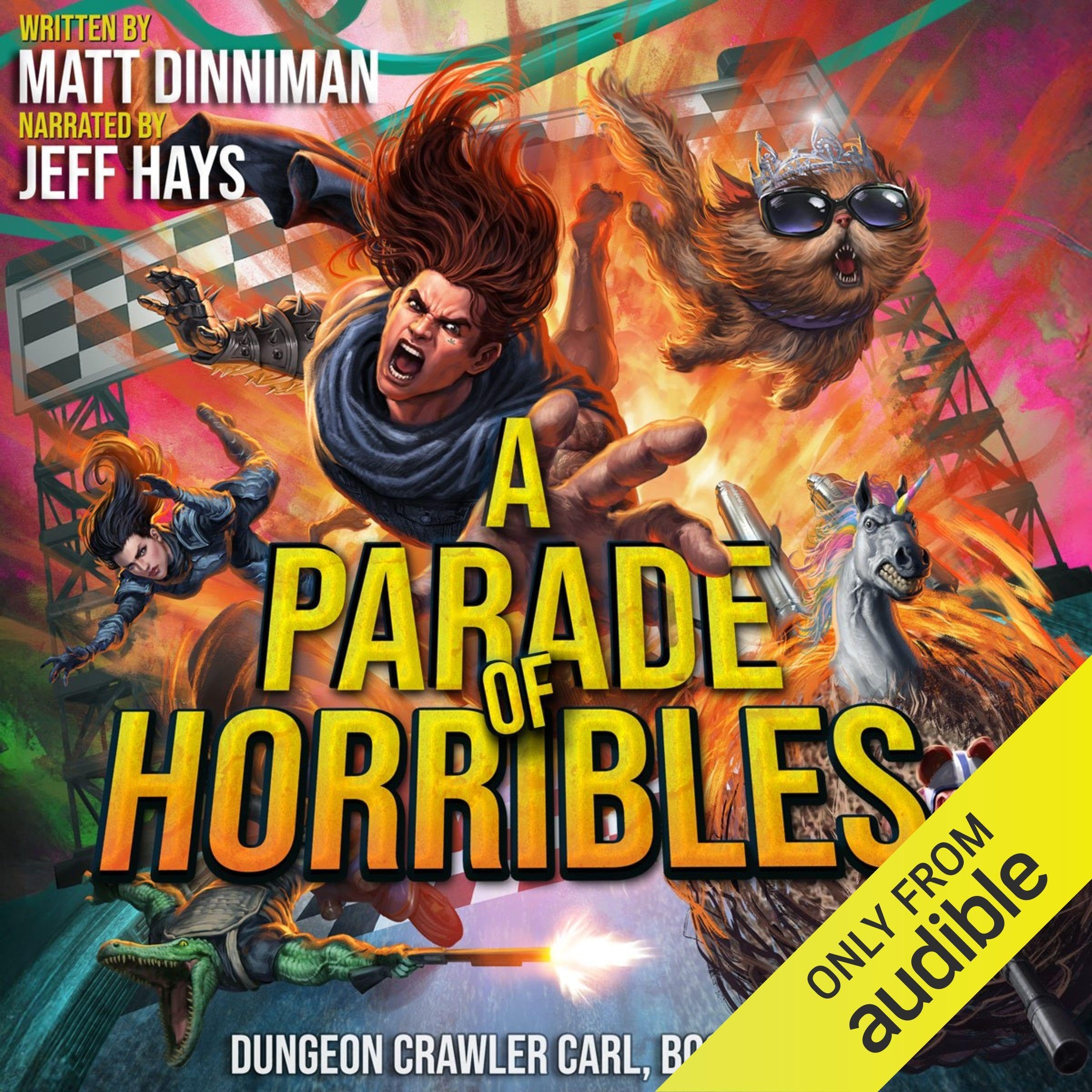
The eighth installment in the Dungeon Crawler Carl series, A Parade of Horribles, picks up immediately after the events of the previous book. For those unfamiliar, this is a litRPG series where protagonist Carl and his cat Princess Donut navigate a deadly, game-like dungeon broadcast to an alien audience. The story blends dark humor, strategic combat, and a persistent critique of exploitative entertainment. This review is based on reading the book as a fan of the series, not as a newcomer.
In practice, this book is best consumed as part of a binge-read of the series. The plot is dense with references to earlier events, and the pacing assumes you recall minor details from books five through seven. I found myself flipping back to earlier chapters to remember who certain side characters were, which slowed down the reading experience. If you are jumping in here, expect to feel lost.
The key functional features of this entry are its expanded skill system and the introduction of new dungeon floors that force creative problem-solving. The author, Matt Dinniman, continues to develop the game mechanics in ways that feel organic to the story. For example, Carl’s use of the Achievement System to gain unexpected advantages remains a highlight. The book also deepens the lore around the dungeon’s creators, though these sections can feel like info-dumps at times.
One notable strength is the character work. Princess Donut’s dialogue is as sharp as ever, and Carl’s internal monologue about the morality of their situation adds weight to the action. The book does not shy away from the consequences of violence, which gives it a darker tone than some earlier entries. However, this also means the humor is more subdued. The absurdity is still there, but it is balanced by longer passages of tension and loss.
However, there are clear trade-offs. The book’s length, around 500 pages, feels padded in the middle. Several chapters focus on inventory management and skill descriptions that, while faithful to the litRPG genre, slow the narrative momentum. For readers who prefer faster-paced action, these sections might feel like filler. Additionally, the ending is abrupt. It sets up the next book but provides little closure for the current arc, which can be frustrating after such a long read.
Compared to other litRPG series like The Wandering Inn or He Who Fights With Monsters, Dungeon Crawler Carl stands out for its tight focus on a single, escalating challenge. Those other series often have sprawling worldbuilding and multiple viewpoints, whereas this book remains tightly zoomed on Carl and Donut. That focus is a strength for readers who enjoy a contained narrative, but it also means less variety in setting and character arcs. If you prefer ensemble casts or political intrigue, this may feel narrow.
Who is this book for? It is best suited for existing fans of the series who are invested in Carl’s journey and enjoy the mix of game mechanics and dark comedy. Readers who appreciate detailed skill systems and strategic combat will find plenty to engage with. It is not suitable for newcomers to the series, those who dislike cliffhanger endings, or readers who prefer standalone stories without heavy reliance on prior books. If you are looking for a lighter, more self-contained litRPG, consider starting with an earlier book in the series instead.
In terms of realistic expectations, A Parade of Horribles delivers on the series’ established formula but does not reinvent it. The writing is competent, the dialogue is sharp, and the worldbuilding remains inventive. But the pacing issues and lack of a satisfying conclusion keep it from being the strongest entry. It feels like a bridge book, necessary for the overall arc but not as impactful as the earlier novels. For dedicated fans, it is worth reading. For casual readers, it might be one to borrow rather than buy.