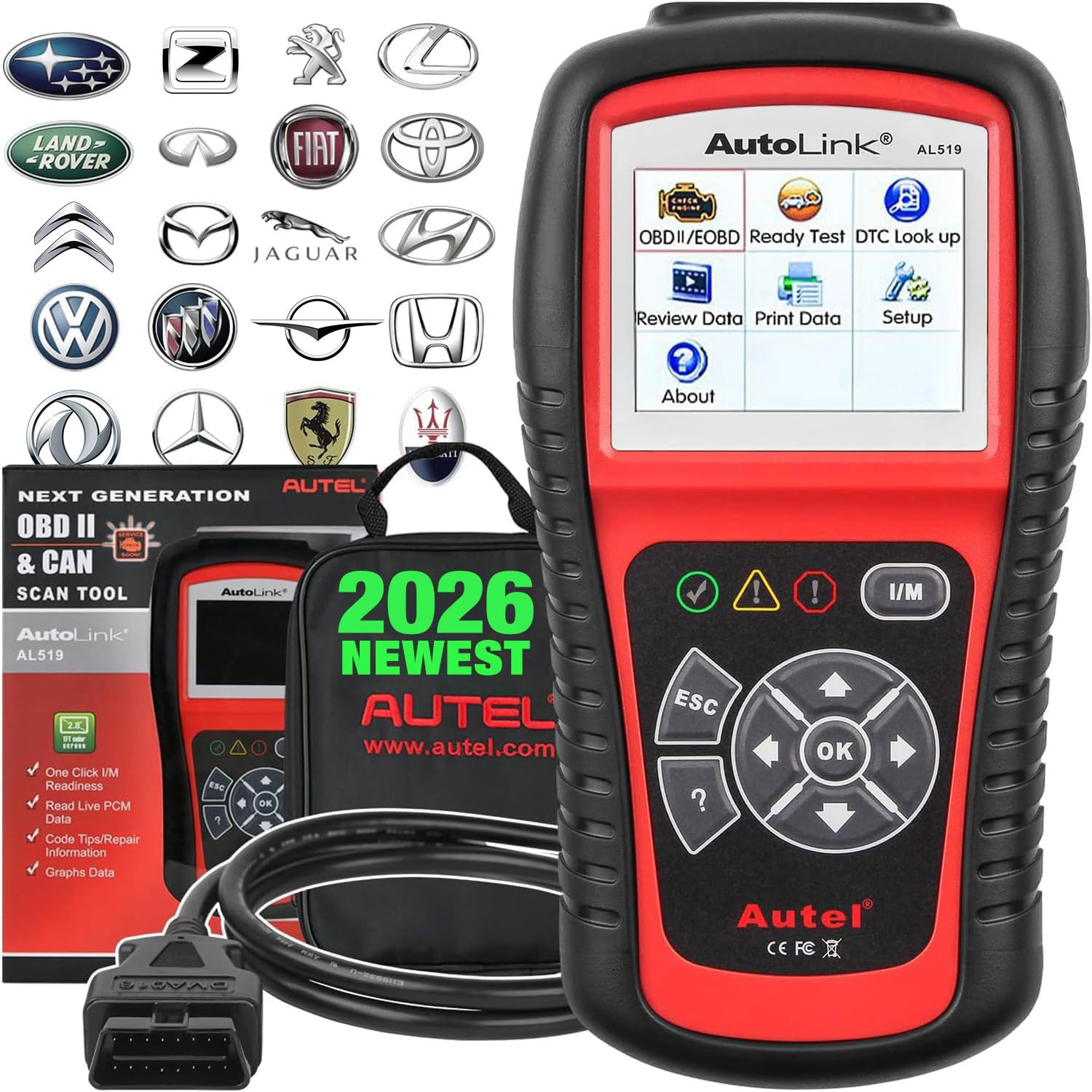
The Autel AutoLink AL519 is a straightforward OBD2 scanner aimed at car owners who want to diagnose check engine lights without a trip to the shop. It’s an upgraded version of the AL319 and MS309, adding a few extra features like a smog check readiness monitor and a DTC lookup library. In practice, this tool is best suited for reading and clearing basic engine codes on vehicles from 1996 onward, but it has clear limits that buyers should understand.
When you plug the AL519 into the OBD2 port under the dashboard, it powers on automatically and presents a simple menu. You can read diagnostic trouble codes (DTCs), view freeze frame data, and check if your vehicle’s emission monitors are ready for an emissions test. The one-click smog check feature is handy if you’re preparing for a state inspection—it quickly tells you if all monitors are complete or if there are pending issues. However, this feature only works on OBD2-compliant cars, which covers most gasoline vehicles from 1996 and newer diesels from 2008 or later.
The screen is a small monochrome display with backlighting, readable in most lighting conditions, though it’s not high-resolution. Navigation uses a four-directional pad and a few buttons, which feel durable but a bit stiff. Menus are logical, and the built-in DTC lookup saves you from constantly checking your phone. That said, the code library is limited to generic powertrain codes—manufacturer-specific codes still require external research.
One limitation worth noting: this scanner only works with OBD2 protocols (CAN, ISO, etc.) and cannot access advanced systems like ABS, airbags, or transmission control modules. If you need to diagnose an antilock brake light or a transmission slip, you’ll need a higher-end model like the Autel MaxiCOM series or a generic multi-system scan tool. The AL519 is strictly for engine-related diagnostics, which is fine for most DIY tasks but not for deeper troubleshooting.
Compared to a simple code reader that just spits out numbers, the AL519 offers more context with its data display and readiness checks. But against a full bidirectional scan tool, it lacks the ability to run tests or actuate components. For example, you can’t command a fuel pump to turn on or reset an oil life monitor. This trade-off is acceptable given the price point, which sits below $50 in most retail stores. It’s a budget-friendly entry point, but not a professional-grade device.
Who should consider this scanner? It’s ideal for someone who wants to quickly check why their check engine light is on, reset it after a repair, or verify smog readiness before an inspection. It’s also good for used car buyers who want a quick health check on a potential purchase. However, it is not suitable for professional mechanics working on multiple vehicle systems, nor for owners of older pre-1996 cars that lack OBD2 compliance. Additionally, if you’re troubleshooting intermittent issues that require live data graphing or recording, this scanner’s basic data display may feel insufficient—you’d be better off with a tool that offers more robust logging.
In real-world use, the AL519 performs reliably for its intended scope. It connects quickly, reads codes accurately, and clears them without fuss. The one-click smog check is genuinely useful, though it only tells you if monitors are ready—not if the car will actually pass an emissions test. The built-in DTC lookup is a nice convenience, but the definitions are short and sometimes vague. You’ll still want to cross-reference online forums or service manuals for full context.
Build quality is decent for the price: the plastic casing is solid, the cable is about three feet long, and the connector fits snugly. It’s not a tool you’ll use daily in a shop, but for occasional home use, it should last years. The lack of Bluetooth or Wi-Fi means no smartphone app integration, which some users might miss. But for those who prefer a standalone device without phone pairing hassles, this is a plus.
Overall, the Autel AutoLink AL519 is a practical, no-frills OBD2 scanner that does its job without gimmicks. It’s not the most advanced or the cheapest, but it strikes a reasonable balance for DIYers who need basic engine diagnostics and smog readiness checks. Just keep its limitations in mind: it’s for engine codes only, and it won’t replace a professional scan tool.