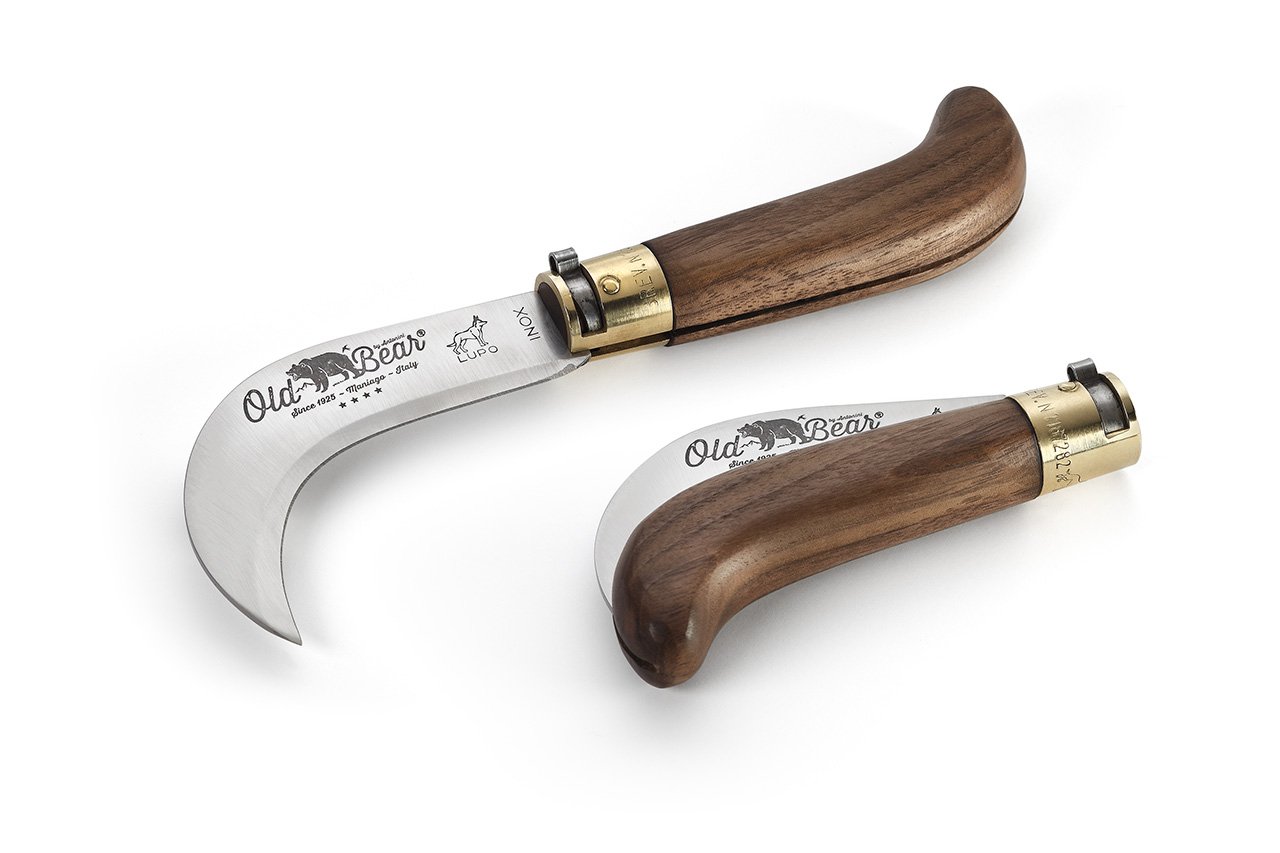
The Antonini Old Bear pruning knife with walnut handle is a tool that feels like it belongs in a different era. Made in Italy by a company that has been producing knives since the 1800s, this is not a modern, high-tech pruner. It is a traditional curved blade knife designed for tasks like grafting, pruning, and general garden work. After spending some time using it in a small orchard and around the yard, it is clear that this knife has specific strengths and clear limitations.
The most noticeable feature is the curved, hawkbill-style blade. It is made from stainless steel, which Antonini calls INOX, and it holds a decent edge. The curve allows for a slicing motion when cutting branches, which is more efficient than a straight blade for this purpose. For green wood up to about the thickness of a finger, it cuts cleanly with a single pull. The blade is not overly thick, which helps with precision, but it also means you should not try to force it through larger, dry branches. That is where a pair of loppers or a folding saw would be more appropriate.
The walnut handle is a major aesthetic and functional point. It is contoured to fit the hand reasonably well, though it is not ergonomic in the modern sense. The wood is smooth and oiled, which gives a warm feel but can be a bit slippery when your hands are sweaty or wet from working with plants. There is no finger guard, which is traditional but also a safety consideration. You need to be mindful of where your fingers are during the cut, especially when using force. The brass ferrule where the blade meets the handle adds a nice touch of durability and classic style.
In real-world use, this knife excels at fine, controlled cuts. It is ideal for grafting, where a clean, precise slice is critical for the union to take. It also works well for trimming small shoots, deadheading flowers, or cutting twine. The blade shape lets you get into tight spaces between branches. However, it is not a general-purpose pocket knife. The hawkbill shape makes it awkward for opening boxes or whittling. It is a specialist tool.
One limitation worth noting is the lack of a locking mechanism. The blade folds into the handle and is held by friction and a small spring tension. It will not accidentally open in your pocket, but it also will not lock open during use. This means the blade can potentially close on your fingers if you apply too much pressure in the wrong direction. It requires a controlled grip and awareness. Compared to a modern folding pruning knife with a lock, like those from Opinel or Victorinox, the Old Bear feels less secure. The Opinel pruning knife, for example, has a locking ring that provides more safety. The trade-off is that the Antonini has a more traditional feel and a thinner, more nimble blade for delicate work.
The knife comes with a simple leather sheath, which is functional but not premium. It holds the knife securely, but the leather is stiff and may take time to break in. The blade is also not razor-sharp out of the box. It is sharp enough for light pruning, but you will likely want to hone it on a stone before serious use. This is common with traditional knives, but it is worth noting for those expecting a factory edge ready for heavy work.
Who is this knife for? It suits orchardists, grafter, and gardeners who appreciate traditional tools and need a precise blade for small, repetitive cuts. It is also a good choice for someone who wants a well-made, attractive tool for light garden work and does not mind the lack of a lock. It is not for someone who needs a heavy-duty pruner for thick branches, nor for a beginner who might benefit from the safety of a locking blade. It is also not ideal as an everyday carry knife due to its specialized shape.
Overall, the Antonini Old Bear is a well-crafted, niche tool. It performs its intended tasks well, but it requires realistic expectations about its limitations. It is a tool for the patient, careful user who values tradition over convenience.