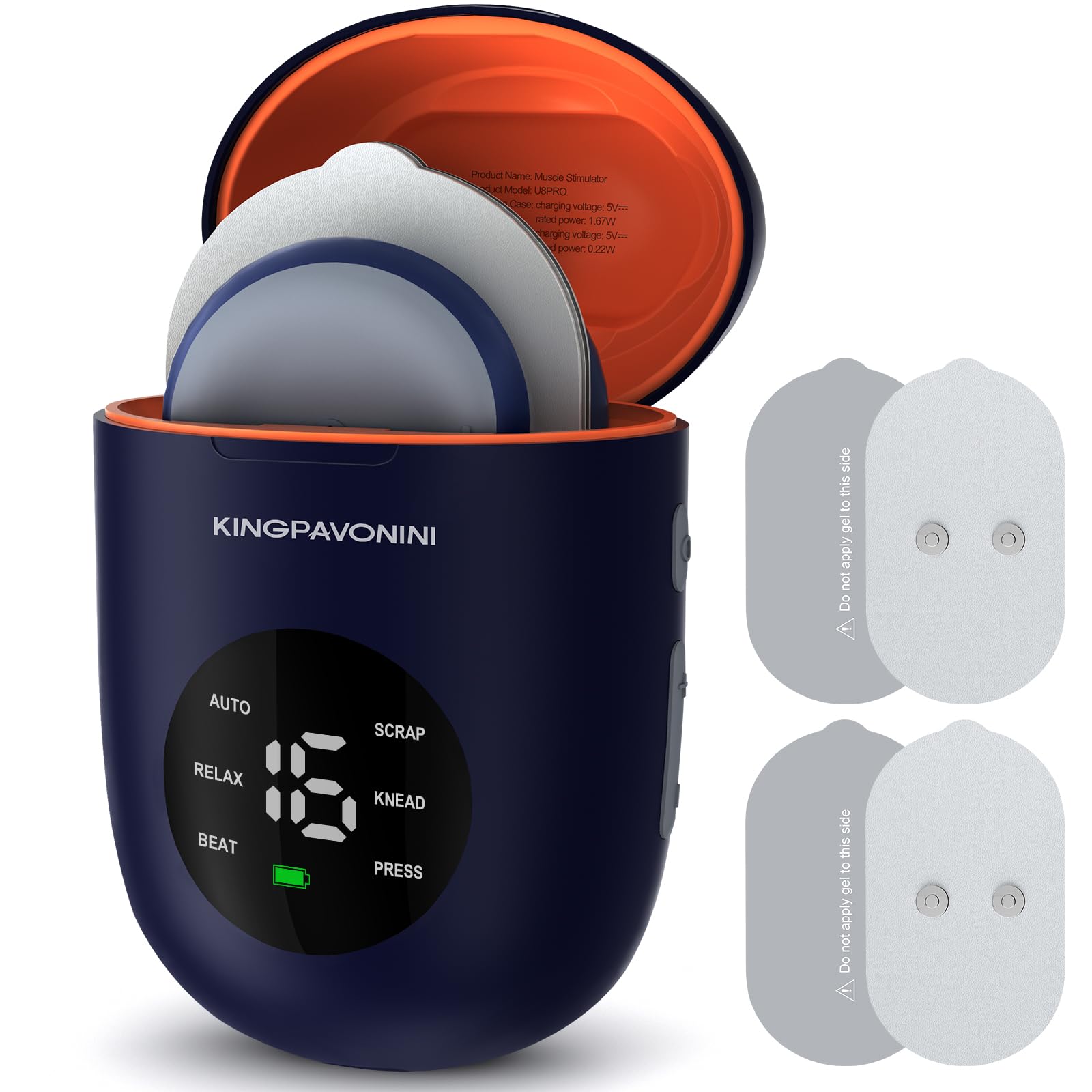
The KingPavonini Wireless TENS Unit is a compact, rechargeable muscle stimulator designed for pain relief. It comes in a blue charging case that holds the device, two electrode pads, and a small remote. The unit itself is about the size of a deck of cards, making it easy to toss in a bag or pocket. It uses TENS (transcutaneous electrical nerve stimulation) and EMS (electrical muscle stimulation) to target sore muscles or chronic pain points.
In real-world use, this device is straightforward. You attach the included electrode pads to the area you want to treat—common spots include the lower back, shoulders, or knees—then pair the remote via Bluetooth. The remote has a small LED screen showing the mode and intensity level. There are six modes and 16 intensity levels. The modes range from a steady pulse to more varied patterns, such as tapping or kneading sensations. For typical muscle tension, mode 1 or 2 at intensity 5 to 8 feels noticeable but not overwhelming. For deeper soreness, higher intensities work, but you might need to move the pads around to avoid skin irritation after 20 minutes.
Key functional features include dual-channel output, meaning you can use two sets of electrode pads simultaneously. This is useful for treating both sides of the lower back or both knees at once. The device is rechargeable via USB-C, and the charging case adds extra portability. A full charge lasts roughly 3 to 4 hours of continuous use, which is reasonable for a device this size. The remote has a range of about 10 feet, so you can adjust settings without reaching for the unit on your body.
Limitations and trade-offs are worth noting. The electrode pads are adhesive but lose stickiness after about 10 to 15 uses, depending on skin type and cleanliness. Replacement pads are available but add ongoing cost. The remote’s LED screen is small and can be hard to read in bright light. Also, the Bluetooth connection occasionally drops if you move too far from the remote, requiring a quick re-pair. The unit itself cannot be used while charging, so you need to plan sessions around battery life.
Compared to a traditional wired TENS unit, such as those from Omron or Auvon, the KingPavonini offers more freedom of movement without cords tangling. However, wired units often have larger screens, more durable pads, and longer battery life. If you prioritize convenience and occasional use, this wireless option is fine. For daily, heavy-duty pain management, a wired unit may be more reliable.
Who is this suitable for? It works well for people who want a portable, no-fuss device for mild to moderate muscle aches after exercise, long workdays, or travel. It is also a decent entry-level unit for those new to TENS therapy. Who should skip it? Those with severe chronic pain, sensitive skin that reacts to adhesives, or a need for precise, consistent stimulation over extended periods may find better results with a clinical-grade or wired unit. Also, if you prefer not to manage Bluetooth pairing, a simpler wired device might be less frustrating.
Overall, the KingPavonini Wireless TENS Unit delivers on its promise of portable pain relief with some practical compromises. It is not a miracle cure, but for targeted, on-the-go sessions, it gets the job done. Just keep spare electrode pads handy and expect to recharge every few uses.