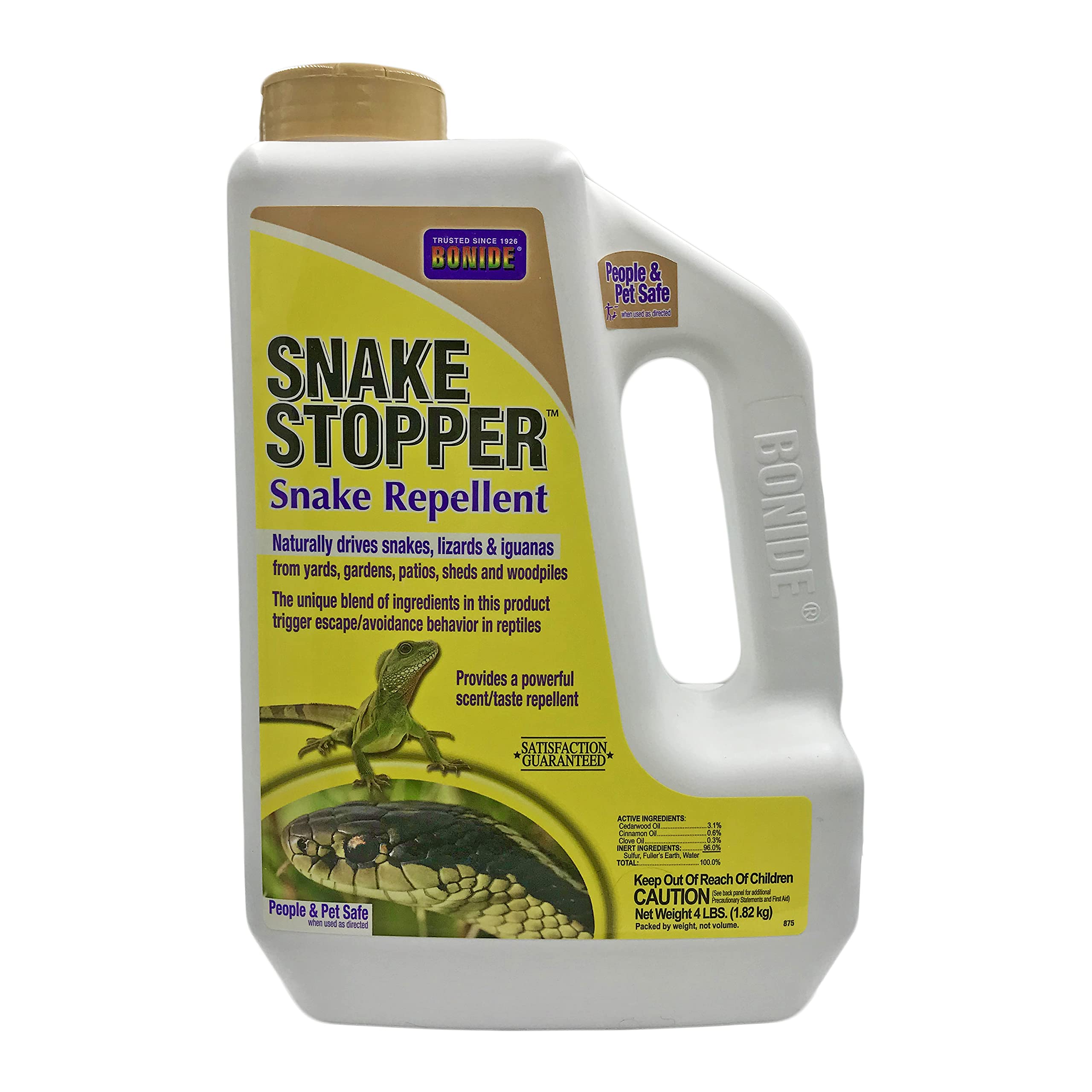
Snake Stopper is a granular repellent designed to discourage snakes from entering yards, gardens, and other outdoor spaces. Marketed as a natural alternative to traps or chemical sprays, it claims to use essential oils and other plant-based ingredients to create an unpleasant sensory barrier for snakes. After testing it in a suburban backyard with a history of garter snake and copperhead sightings, here is how it performed in real-world conditions.
The product comes in a shaker-top jug, which makes application straightforward. You sprinkle the granules along fence lines, around garden beds, near woodpiles, and at the base of decks or sheds. The instructions recommend reapplying after heavy rain or every 30 days. The scent is strong and somewhat medicinal—think clove, cinnamon, and peppermint oils—but not overwhelmingly chemical. It fades noticeably within a few days, which raises questions about how long the repellent effect actually lasts.
Key functional features include a blend of essential oils (cinnamon oil, clove oil, and others) that are said to irritate snakes’ Jacobson’s organ, a sensory organ used for detecting chemical cues. The granules are weather-resistant to some degree, but not waterproof. The product covers up to 1,000 square feet per container, depending on how liberally you apply it. It is also labeled as safe for pets and children once the granules are watered in (per the instructions), though the strong initial odor may deter some animals temporarily.
In practice, the repellent’s limitation is its variable effectiveness. During the first week after application, we noticed no snake activity around treated areas. However, after a moderate rain on day eight, the granules visibly washed away from sloped sections of the yard, and a small garter snake was spotted near the compost pile. The manufacturer’s reapplication recommendation is reasonable, but it demands consistent effort—and even then, the repellent is unlikely to work as a complete barrier. Snakes can simply bypass treated zones if they find a clear path. The product seems better suited as a deterrent than a guarantee.
Compared to alternative products, Snake Stopper occupies a middle ground. Ultrasonic repellents, which emit sound waves, have shown little to no effect in controlled tests and are often dismissed by herpetologists. Physical barriers like snake-proof fencing (fine mesh buried several inches underground) are far more reliable but require significant installation effort and cost. Chemical sprays with naphthalene or sulfur can be effective but may pose risks to plants, pets, or soil health. Snake Stopper offers a less invasive option, but it also demands more frequent maintenance than a fence and is less potent than some chemical alternatives. For light infestations or occasional sightings, it may be worth trying; for heavy snake populations, it is probably not enough alone.
Who it is suitable for: Homeowners with small to medium yards who want a low-toxicity, easy-to-apply repellent for occasional use. It works best as part of a broader snake management strategy—keeping grass short, removing debris, sealing gaps in foundations—rather than as a standalone solution. People who enjoy gardening and prefer natural products may find it appealing, especially if they are okay with reapplying every few weeks.
Who it is not suitable for: Those expecting a one-time fix or a foolproof barrier. If you live in an area with high snake pressure (e.g., near wetlands, forests, or large fields) or have venomous species like rattlesnakes or cottonmouths, this product is unlikely to provide adequate protection. It is also not ideal for large properties, as the cost and labor of covering many acres with granules become impractical. And if you are sensitive to strong scents, the initial application might be unpleasant.
Overall, Snake Stopper is a decent option for casual snake deterrence, but it is not a silver bullet. Its performance depends heavily on weather, application consistency, and the specific snake species in your area. For many users, it may reduce the frequency of sightings without eliminating them entirely. That is a realistic expectation to have before buying.