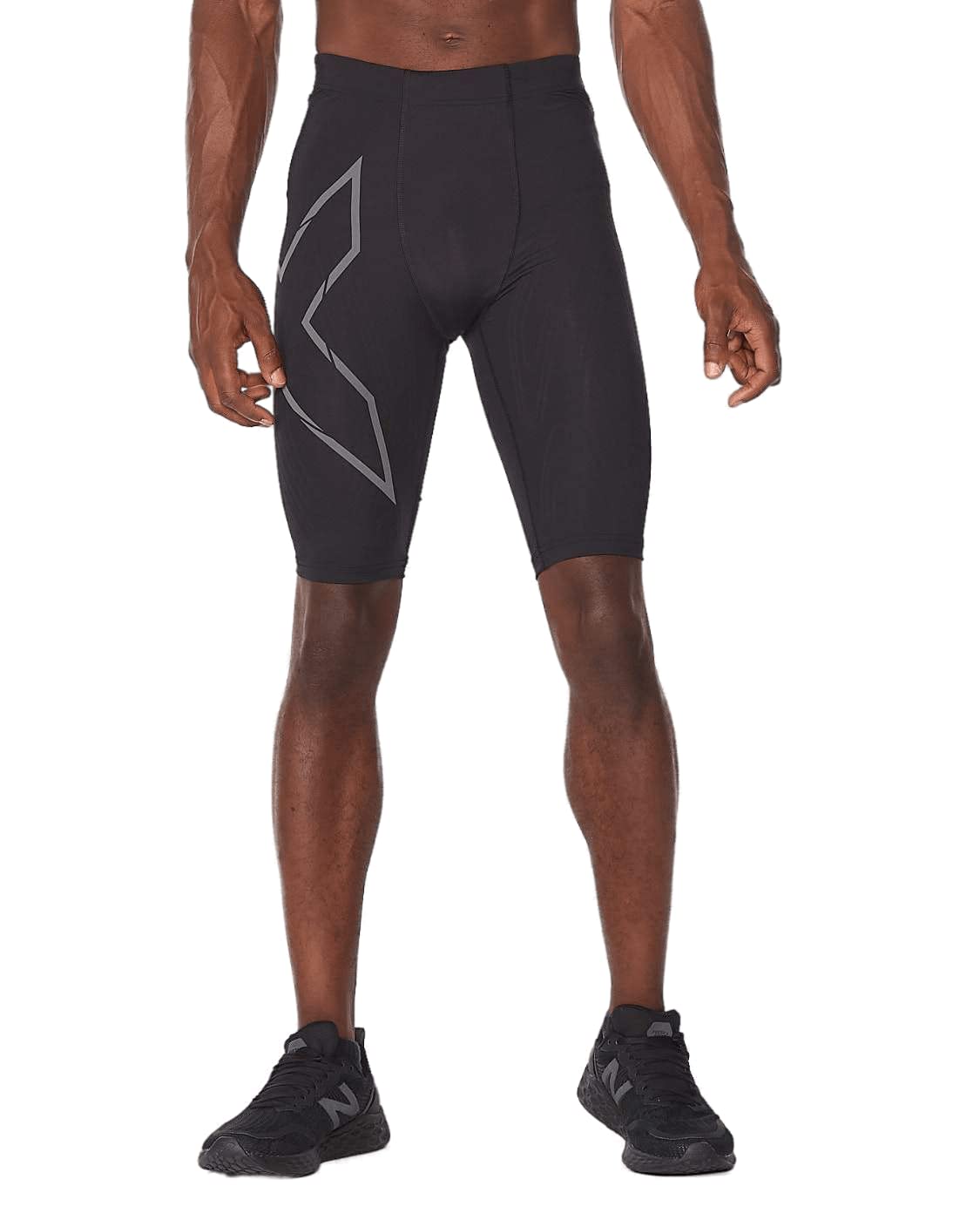
Compression gear occupies an odd space in running. Some swear by it, others see it as an expensive extra layer. The 2XU Mcs Run Compression Short sits firmly in the former camp, but it does so with a level of restraint that might surprise you. This isn’t the kind of short that screams for attention; it’s more about what it does quietly during a run.
I spent several weeks testing these on early morning runs, tempo sessions, and a few longer efforts that stretched past the hour mark. The medium size fit true to form for someone with a 32-inch waist, offering a snug but not restrictive feel. The compression is noticeable from the moment you pull them on, but it’s not the kind of aggressive squeeze you get from some recovery tights. It’s more of a consistent, supportive pressure across the quads and glutes, which becomes most apparent during the latter stages of a run when muscles start to fatigue.
The fabric is a key part of the experience. It’s a dense, sweat-wicking material that feels substantial without being heavy. In humid conditions, it managed moisture reasonably well, though it’s not magic. You’ll still feel damp after a hard effort, but the fabric doesn’t cling or chafe, which is more than I can say for several other compression shorts I’ve tried. The flatlock seams are placed thoughtfully—no rubbing along the inner thigh, which is a common failure point in this category. The reflective details on the back and sides are subtle but effective; they picked up car headlights clearly during pre-dawn runs.
One feature that stands out is the minimal waistband design. It’s not a thick, elastic band that digs in; instead, it sits flat and stays put without rolling. There’s a small internal pocket at the rear, just big enough for a key or a gel. It’s not a phone pocket, and that’s worth noting. If you’re the type who runs with your phone, you’ll need to find another solution. This is a short designed for focused training, not for carrying your entire life with you.
Compared to a standard running short with a liner, the 2XU offers a different kind of support. A loose short with a brief liner gives you freedom of movement and ventilation, but it doesn’t provide the same muscle stabilization. If you’re doing short, fast intervals or easy recovery runs, a standard short might feel more comfortable and breathable. The compression short shines when you’re doing sustained efforts—tempo runs, progression runs, or long miles where muscle oscillation and fatigue become factors. It’s also a solid choice for strength training or cross-training sessions, where the compression can aid in proprioception and support.
There are a few trade-offs to consider. The first is the fit. These are not forgiving. If you’re between sizes, sizing up is a safer bet, as the compression is meant to be firm. The second is the price point. These are not budget shorts. You’re paying for the fabric technology and the construction, and for many runners, that’s a justifiable investment. But if you’re casual about your running and don’t notice or care about muscle support, you’d be fine with a cheaper option.
Who is this short for? It’s for the runner who takes training seriously and wants a piece of gear that performs consistently across a range of sessions. It’s also for someone who appreciates the subtle benefits of compression—reduced muscle vibration, a slight perceived increase in leg freshness, and a secure, stay-put fit. It is not for the runner who prefers a loose, breezy feel on easy runs, nor for those who need to carry a phone or other gear on their person. It’s a specialized tool, and it does its job well.
In terms of durability, the fabric has held up well after multiple washes. No pilling, no fraying, and the reflective elements remain intact. The black/black reflective colorway is understated, which I appreciate. It looks like a serious training piece, not a fashion statement.
Ultimately, the 2XU Mcs Run Compression Short is a well-executed piece of running apparel. It doesn’t promise to make you faster, and it doesn’t. What it does is provide a level of support and comfort that lets you focus on the run itself. If that sounds like what you’re after, it’s worth the investment. If not, there are simpler options that will do the job just fine.