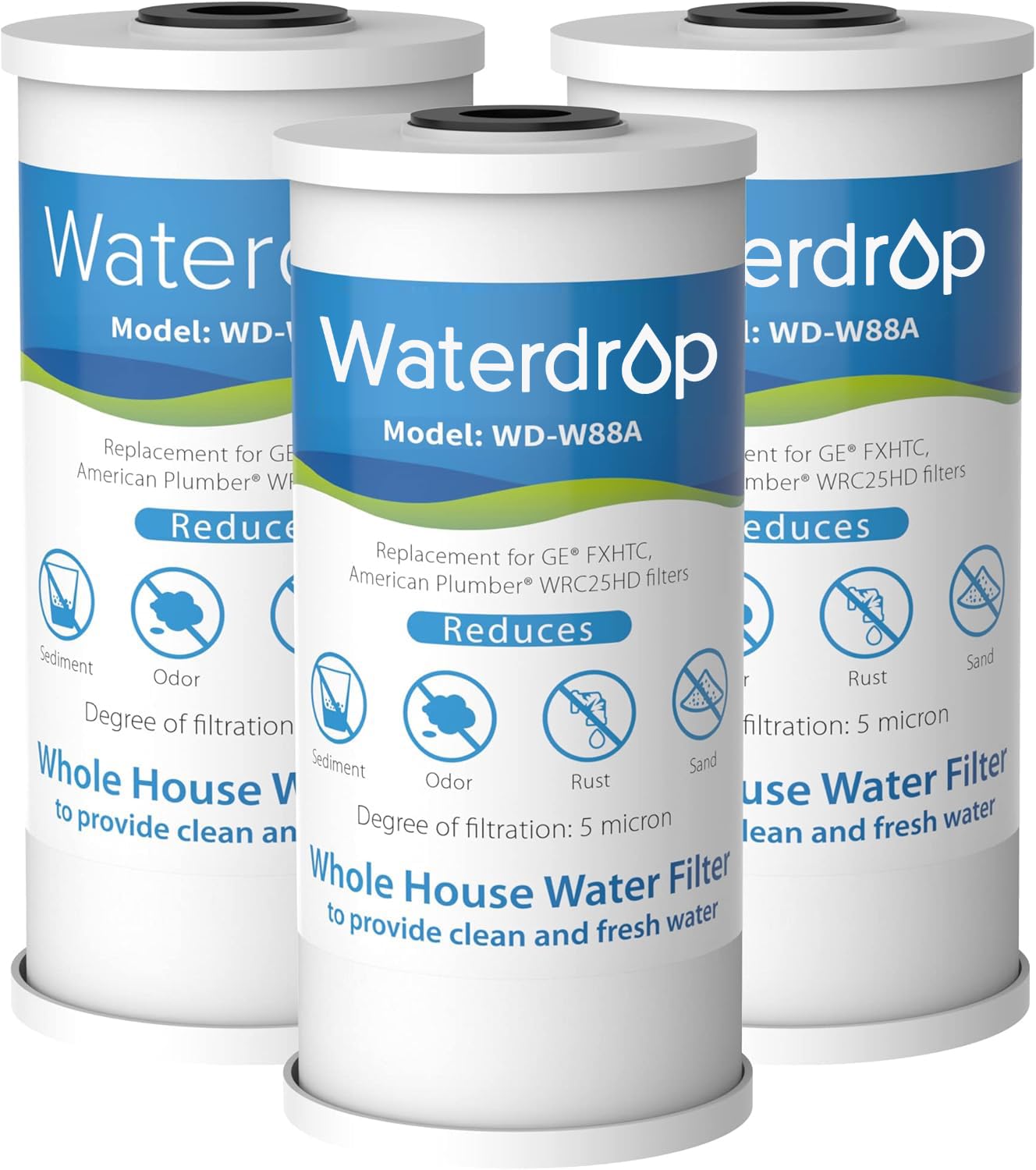
When it comes to whole-house water filtration, the cartridge is the workhorse. The Waterdrop FXHTC is a 10-inch by 4.5-inch carbon block filter designed to replace several common models, including GE FXHTC, GXWH40L, and Culligan RFC-BBSA. After using a set of three over several months, here is a grounded look at what these cartridges actually deliver.
The primary job of this filter is to reduce sediment, chlorine taste and odor, and some larger particulates. At 5 microns, it catches things like sand, rust, and dirt without being so fine that it restricts flow dramatically. In practice, this means water from every tap—kitchen, bathroom, even the garden hose—feels noticeably cleaner. The chlorine reduction is real; the smell that often comes from municipal water is largely gone. For anyone on city water, this is the most noticeable benefit.
Key functional features include a coconut-based carbon block construction, which is standard for this class of filter. It fits into standard 10-inch by 4.5-inch housings, making it a direct swap for many GE, Culligan, and American Plumber models. The 5-micron rating is a middle ground—fine enough to trap visible sediment but not so fine that it clogs quickly in typical household conditions. Each cartridge is rated for about 3 to 6 months, depending on water quality and usage. The pack of three covers roughly a year of filtration for an average family.
Realistically, this is not a filter that will remove heavy metals, dissolved solids, or bacteria. It is not a reverse osmosis system or a UV sterilizer. Its strength lies in addressing the most common municipal water complaints: chlorine, bad taste, and visible particles. If your water comes from a well or has known contaminants like lead or nitrates, this cartridge alone will not solve those issues. It is a baseline improvement, not a comprehensive solution.
One limitation worth noting is the flow rate. While the 10×4.5 size allows decent throughput, homes with high simultaneous demand—like running two showers and a washing machine—may notice a slight pressure drop. This is typical for carbon block filters of this size. It is fine for most households, but if you have a large family or very high water consumption, you might consider a larger diameter filter or a two-stage setup.
Compared to generic spun polypropylene sediment filters, the Waterdrop FXHTC offers the added benefit of chlorine reduction. A basic 5-micron sediment filter costs less but does nothing for taste or odor. A catalytic carbon filter can be more effective for chloramine removal, but this standard carbon block handles free chlorine well. For most city water users, this is a practical trade-off.
Who is this suitable for? It is a solid choice for homeowners on municipal water who want to reduce chlorine taste and sediment without spending a lot. It works well as a pre-filter for a water softener or as a standalone whole-house filter. It is also a good option for renters with a compatible housing who want a simple, drop-in improvement.
Who might want to look elsewhere? Those on well water with heavy sediment loads may find the 5-micron rating clogs too quickly; a 20- or 30-micron sediment filter would be more practical as a first stage. Anyone needing to remove specific contaminants like lead, arsenic, or bacteria will need a more specialized system. Also, if your water has chloramine instead of chlorine, this filter is less effective; a catalytic carbon filter would be a better match.
Installation is straightforward: shut off the water, depressurize the housing, swap the cartridge, and open the valve. No tools are required, though a filter wrench helps if the housing is tight. The cartridges themselves are well-sealed and do not shed carbon dust excessively during initial use, though a brief flush is recommended.
Overall, the Waterdrop FXHTC does what it promises—reduces chlorine and sediment at a reasonable price. It is not a miracle device, but for everyday water quality improvement, it is a reliable, no-fuss option. The pack of three offers good value, and compatibility with major brands makes it easy to find. Just keep expectations in line with what a carbon block filter can realistically do.