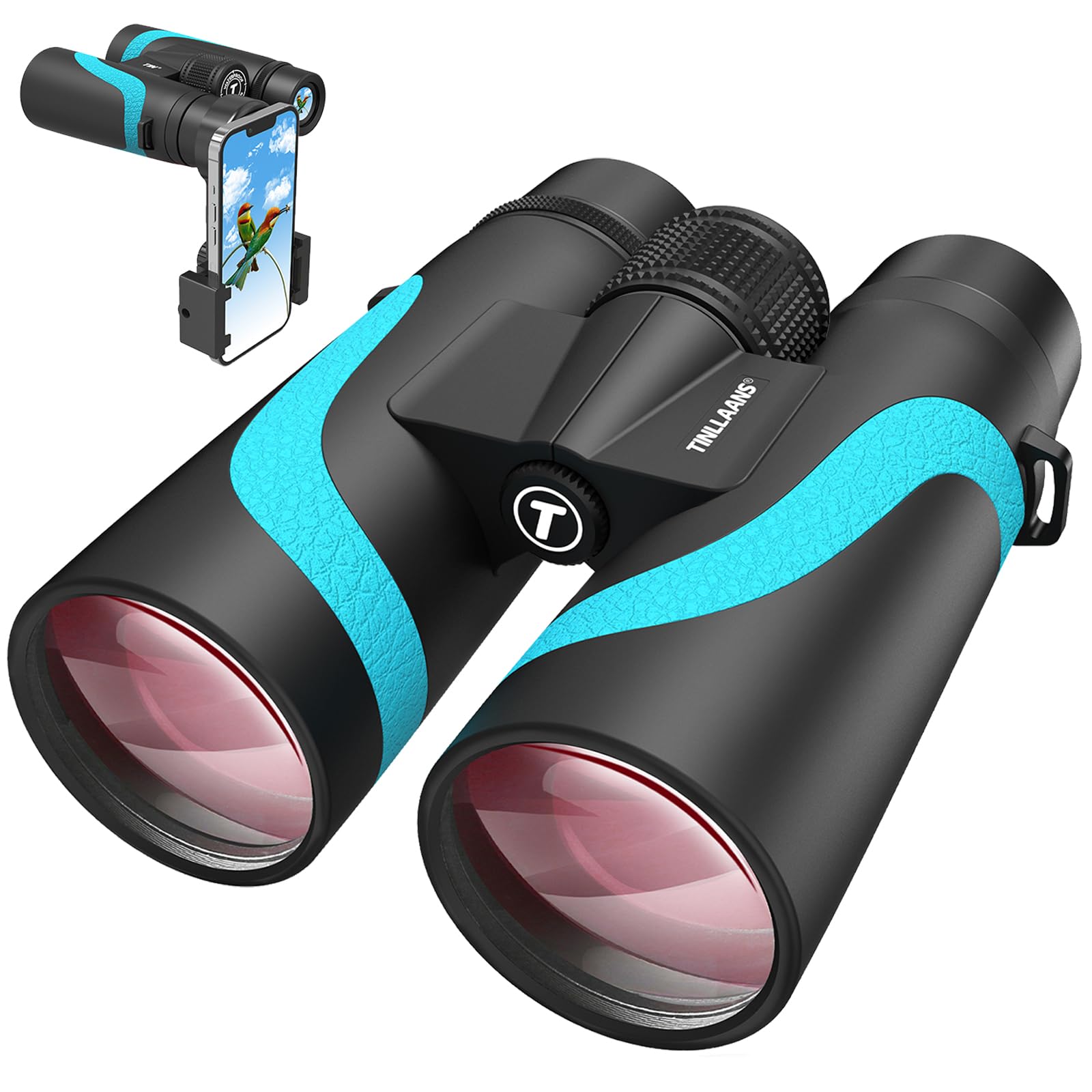
The 15×55 UHD binoculars in blue are a specific tool for a specific kind of viewing. They are not a casual grab-and-go pair for a quick walk in the park. Instead, they are designed for situations where you need to see detail at a distance—think birdwatching from a fixed point, scanning a shoreline from a cruise ship deck, or monitoring a hunting field. The magnification is high, and the 55mm objective lenses let in a decent amount of light, making them usable in early morning or late afternoon conditions, though they are not designed for true low-light use like astronomy or dusk observation.
The first thing you notice is the build quality. The body is wrapped in a rubber armor that provides a solid grip, and the blue finish is more subdued than the pictures suggest—it’s a dark, metallic blue that looks less flashy in person. They feel sturdy without being excessively heavy, which is important for a binocular at this magnification. The central focus wheel is smooth but has a slight resistance that prevents accidental adjustments. The diopter ring on the right eyepiece is stiff enough to stay in place once set, though it requires a bit of effort to turn, which can be a minor inconvenience when sharing with someone who has different eyesight.
The included phone adapter is a practical addition, but it has limitations. It clips onto the eyepiece and secures your phone with a spring-loaded holder. It works well enough for capturing distant subjects in good light, but aligning the phone camera with the binocular’s exit pupil takes patience. You will likely need to fiddle with the position to avoid vignetting or blur. The adapter is best for still subjects; tracking a moving bird or animal while filming is tricky because the binoculars are heavy enough that hand shake becomes noticeable at 15x magnification. A tripod is strongly recommended for any serious digiscoping.
Optical performance is where these binoculars show their strengths and weaknesses. The BAK4 prisms and fully multi-coated lenses produce a bright, sharp image in the center of the field of view. Color rendition is neutral, with no obvious tint, and contrast is good for the price range. However, edge sharpness falls off noticeably—about 20% of the outer field will be softer. This is common in binoculars at this price point, but it is worth noting if you need edge-to-edge clarity. Chromatic aberration (color fringing) is present on high-contrast edges, like branches against a bright sky, but it is not severe enough to ruin the view.
Field of view is narrow at around 210 feet at 1000 yards. This is a trade-off of the high magnification. You will have to pan more to track moving subjects, and finding a target quickly can be frustrating. Compared to a typical 8×42 binocular, which offers a much wider view, these feel restrictive. For scanning large open areas, a lower magnification like 10x or 12x would be more forgiving. The 15×55 is better suited for stationary observation of a specific area, such as a nest or a distant ridgeline.
Waterproofing and fog-proofing are present, with nitrogen purging to prevent internal fogging. I tested them in light rain, and they performed fine. The lens caps are tethered and stay attached, which is a nice touch. The carrying case is functional but basic; it provides adequate padding and has a belt loop, but the zipper feels a bit cheap and might wear out over time.
There are a few limitations to consider. The eye relief is about 16mm, which is adequate for most users but may not be sufficient for those who wear glasses. You will likely need to press your glasses against the eyecups to see the full field, and the twist-up eyecups do not lock into intermediate positions—they only have two stops: fully up or fully down. This can be annoying if you prefer a partial twist. Additionally, the binoculars are not ideal for long-duration handheld use. At 15x, even small hand tremors are amplified, making the image shaky. A monopod or tripod is almost a necessity for steady viewing beyond a few minutes.
In terms of alternatives, a 12×50 or 10×42 binocular would be easier to hold steady and offer a wider field of view, though with less reach. If you prioritize stability and versatility over raw magnification, those might be better choices. For the price, these 15×55 binoculars are a decent entry into high-power observation, but they are not a do-everything tool.
Who this is for: Birders who watch from a blind or fixed position, hunters who scan open fields from a stand, or travelers on a cruise who want to study distant landmarks or wildlife. The phone adapter adds convenience for casual photography, but expect to spend time setting up each shot.
Who this is not for: Hikers or backpackers who need a lightweight, compact binocular for quick use. The size and weight (around 30 ounces) make them bulky for long treks. Also, anyone who primarily watches sports or events in low light should look for a larger objective or lower magnification. If you wear glasses, test the eye relief before buying.