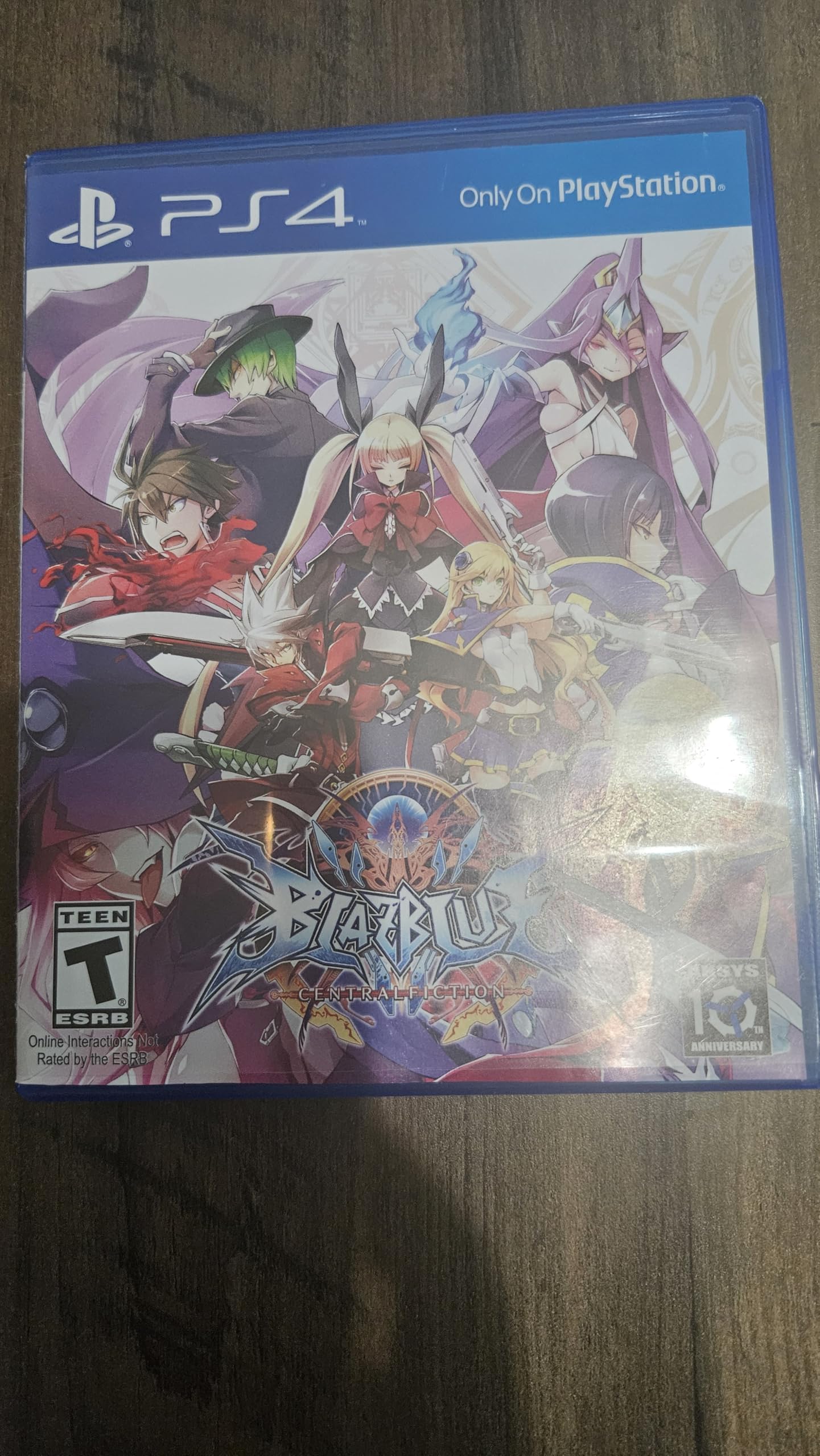
BlazBlue: Central Fiction arrived on PlayStation 4 as the fourth main entry in Arc System Works’ long-running 2D fighting series, and it carries the weight of everything that came before it. This is not a clean jumping-on point so much as a culmination, and that distinction shapes almost everything about how the game plays, reads, and holds up for different kinds of players.
For those unfamiliar with the series, Central Fiction is a fast, anime-styled 2D fighter built around character-specific mechanics rather than a single universal system. The roster is large, drawing from previous entries and adding new faces, and each fighter has a distinct drive mechanic that changes how they approach neutral, offense, and defense. Matches are quick and visually busy, with air dashes, rapid cancels, and long combo routes that reward lab time. The PS4 version runs at a stable frame rate in most offline modes, and the visual presentation—hand-drawn sprites over 3D backgrounds—remains one of the more distinctive looks in the genre.
Where the game demands patience is in its structure. Central Fiction includes a substantial visual novel-style story mode that concludes the series’ long-running narrative. It is genuinely lengthy, and it assumes familiarity with prior games. Newcomers who jump straight in will encounter a cast with established relationships and terminology that the game does not always stop to explain. The story content is a real feature, not a token extra, but it functions more as a payoff for existing fans than an onboarding tool.
In terms of functional content, the package is broad. There is an arcade mode, a challenge mode with character-specific combo trials, a training mode with detailed frame data and hitbox display options, and various survival and score-attack variants. Online play supports ranked and player matches, though the population has thinned considerably since release, and matchmaking can be slow depending on region and time of day. Offline versus remains the most reliable way to play, and local sessions are where the game feels most at home.
The combat system itself is dense. Each character has a drive attack tied to their identity—some summon projectiles, others alter movement or apply status effects—and the game expects players to learn these quirks alongside universal mechanics like barrier blocking and rapid canceling. The tutorial is more thorough than many fighters of its era, but it still leaves a lot of discovery to the player. Execution requirements vary widely by character, and some combos demand tight timing that will frustrate those used to more forgiving inputs.
One limitation worth noting is the learning curve’s shape. The game is not simply hard to execute; it is hard to understand at first. The screen fills with effects, and the pace of matches can make it difficult for a beginner to parse what just happened. Training mode is robust, but the game does little to bridge the gap between practicing a combo and applying it against a moving opponent. That gap is normal for the genre, yet Central Fiction’s roster diversity makes it wider than in more streamlined fighters.
Compared with a contemporary like Guilty Gear Xrd, which shares the same developer and a similar visual approach, Central Fiction is arguably more mechanically idiosyncratic. Xrd offers a somewhat more unified system and a cleaner entry point for newcomers, while Central Fiction leans harder into character-specific complexity. Compared with a 3D fighter such as Tekken 7, the difference is starker: Tekken rewards movement and matchup knowledge in a more grounded way, whereas Central Fiction is about aerial mobility and layered offense. Neither approach is superior; they simply suit different temperaments.
The PS4 version includes the base roster and the story content, but players should be aware that additional characters were released as DLC. The complete roster is not on the disc, and depending on which edition is purchased, some fighters may need to be bought separately. This is a practical consideration for anyone buying used or expecting a fully self-contained package.
Who is this for? It suits players already invested in the BlazBlue narrative who want closure, fighting game enthusiasts who enjoy deep, character-specific systems and are willing to spend time in training mode, and groups who play locally with friends at a similar skill level. It is less suitable for complete newcomers to fighting games who want a gentle introduction, for players who primarily want a robust online experience with fast matchmaking, or for those who prefer a story mode that stands alone without prior context.
Central Fiction is a dense, rewarding fighter that asks a lot before it gives much back. For the right player, that exchange is fair. For everyone else, it can feel like arriving at the end of a long conversation already in progress.